
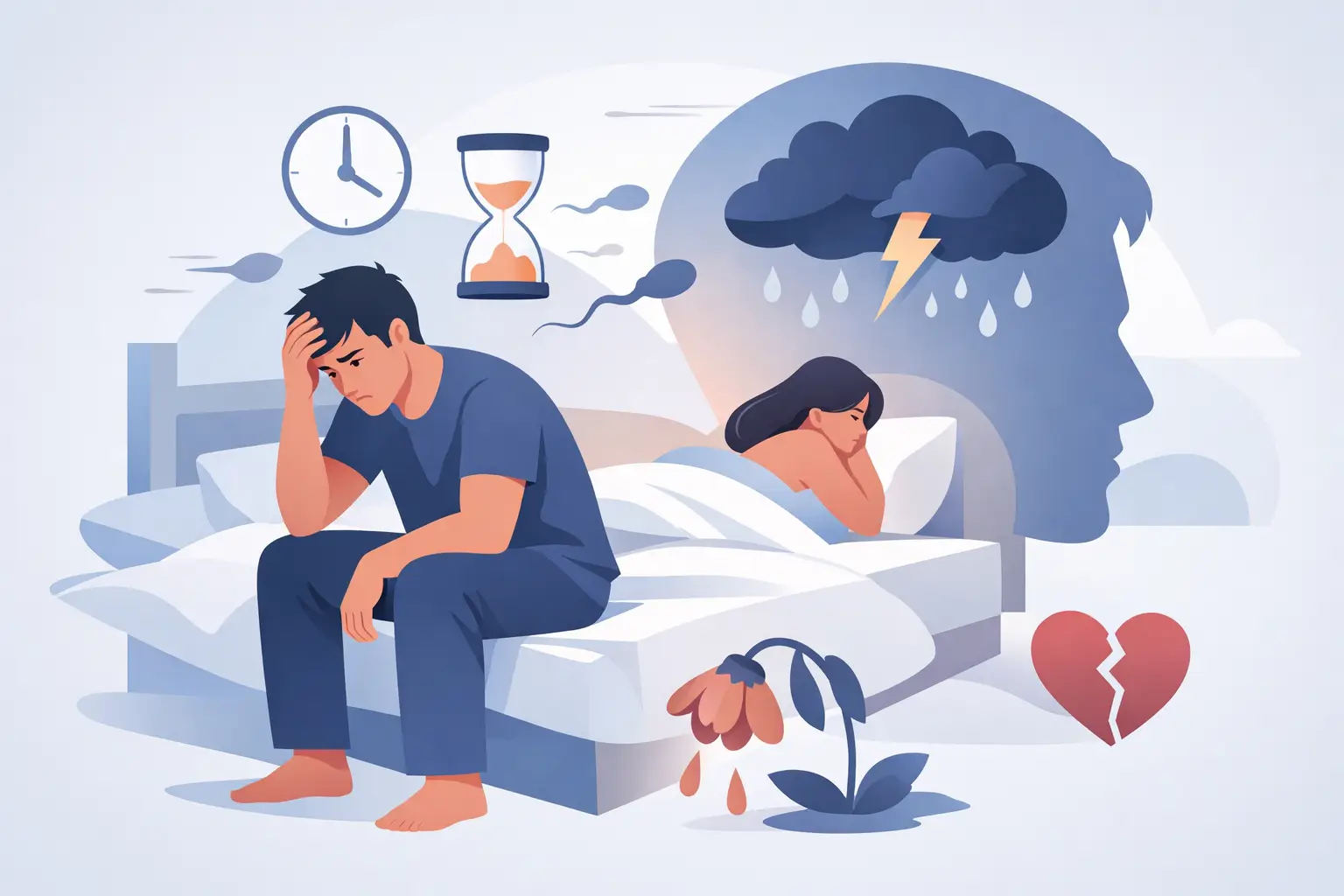
For many men, the first sign of a problem is not pain or loss of desire. It is frustration – finishing sooner than expected, feeling out of control, and worrying it will happen again. If you are asking what causes premature ejaculation, the answer is usually not one single issue. In most cases, it involves a mix of physical sensitivity, learned patterns, stress, and relationship or health factors.
Premature ejaculation is common, and it can affect men at different stages of life. Some men have dealt with it since their earliest sexual experiences. Others notice it later, often during periods of stress, after changes in health, or alongside erection problems. Either way, it is a medical concern worth discussing, not something you simply have to live with.
What causes premature ejaculation in the first place?
Premature ejaculation generally means ejaculation happens sooner than desired, with reduced sense of control and distress for the man, his partner, or both. There is no single stopwatch that defines it for everyone. What matters clinically is the pattern, how long it has been happening, and whether it is causing frustration, avoidance, or relationship strain.
Doctors usually think about the causes in two broad categories: psychological and physical. The challenge is that these often overlap. A man may start with heightened penile sensitivity, then develop anxiety from repeated experiences, which makes the problem more likely the next time. That cycle can become self-reinforcing.
Psychological causes
Performance anxiety is one of the most common contributors. When a man is focused on whether he will last long enough, his body can shift into a more activated state. That heightened tension can speed up arousal and reduce control. The more he worries, the less natural the experience becomes.
Stress outside the bedroom matters too. Work pressure, poor sleep, financial strain, and family stress can all affect sexual function. Some men assume stress only lowers desire, but it can also make arousal feel rushed and less controlled.
Early sexual conditioning can play a role. Men who became used to ejaculating quickly during adolescence – often because of secrecy, fear of being interrupted, or a habit of rushing – may carry that pattern into adult sex. This does not mean the problem is permanent, but it helps explain why some cases begin early and persist.
Relationship factors are also relevant. Tension with a partner, poor communication, guilt, lack of trust, or long gaps between sexual activity can all change arousal patterns. In some relationships, the pressure to perform well can itself become the trigger.
Depression and general anxiety disorders can contribute as well. Sometimes the condition itself causes emotional distress. Other times, mood symptoms come first and worsen sexual control. It depends on the individual history.
Physical causes
Physical causes are often overlooked, especially by men who assume premature ejaculation is purely “in their head.” In reality, biology can be a major factor.
Penile hypersensitivity is one possible cause. Some men appear to have a lower threshold for sexual stimulation, which means they become highly aroused very quickly. This may be part of why ejaculation occurs sooner, though it is rarely the whole story by itself.
Neurotransmitters, especially serotonin, are also involved. Serotonin helps regulate ejaculation timing, and lower activity in certain serotonin pathways may reduce ejaculatory control. This is one reason some medications that affect serotonin can help selected patients.
Hormonal issues may contribute in some cases. Abnormal thyroid function, especially an overactive thyroid, has been linked with premature ejaculation in some men. Hormone-related changes in overall sexual function can also affect arousal and timing.
Inflammation or irritation in the prostate or urethra may be relevant for some patients. If ejaculation changes suddenly, especially with discomfort, urinary symptoms, or pelvic pain, a medical evaluation becomes more important.
Erectile dysfunction can be closely connected. This is a common but underrecognized pattern: a man worries he may lose his erection, so he rushes during intercourse, either consciously or unconsciously. Over time, that can look like premature ejaculation. In these cases, treating the erection issue may improve ejaculatory control.
Why it can start suddenly
When premature ejaculation appears out of nowhere, men often assume something is seriously wrong. Sometimes there is an identifiable medical issue, but often the cause is a recent change rather than a dangerous disease.
A new partner, a long period without sex, increased stress, worsening sleep, changes in alcohol use, or a drop in confidence after one bad experience can all trigger sudden symptoms. In other men, new erectile difficulties are the real starting point. They may not notice it at first because the focus stays on finishing too quickly.
Sudden change is one reason a proper consultation matters. Lifelong premature ejaculation and acquired premature ejaculation are not always managed the same way, because the likely causes are different.
What increases the risk?
Some men are simply more prone to this condition because of a combination of temperament, sensitivity, and sexual history. But several factors can increase the likelihood or make symptoms worse.
Chronic stress, anxiety, and fatigue are major ones. So are infrequent sexual activity, relationship conflict, and unrealistic expectations shaped by pornography or past experiences. Men who judge themselves harshly after a single episode often create more pressure than the original problem deserved.
Certain medical conditions can increase risk, including erectile dysfunction, prostatitis, thyroid disorders, and broader mental health concerns. Age alone is not the main cause, although changes in health, hormones, and sexual confidence over time can influence it.
When is it time to see a doctor?
If it happens occasionally, especially during stress or with a new partner, it may not indicate a persistent disorder. Most men will have an off night at some point. The concern becomes more meaningful when it happens regularly, feels out of your control, and starts affecting confidence, intimacy, or avoidance of sex.
You should also seek medical advice if the problem is new, worsening, or happening alongside erectile dysfunction, pelvic discomfort, urinary symptoms, low mood, or major relationship stress. These details help a clinician figure out whether the cause is primarily physical, psychological, or mixed.
A good consultation is not about judgment. It is about getting a clear history, identifying contributing factors, and choosing treatment based on your specific pattern.
How doctors assess what causes premature ejaculation
Evaluation usually starts with a straightforward conversation. A doctor will ask when the problem began, whether it has been lifelong or acquired, how often it happens, whether erections are reliable, what your health history looks like, and whether stress or relationship concerns may be involved.
That history matters more than many men expect. It often reveals whether the condition is linked to anxiety, erectile dysfunction, hormonal issues, or a learned response pattern. In some cases, blood tests or further examination may be recommended, especially if there are signs of thyroid problems, low testosterone, infection, or other medical concerns.
The goal is not just to label the problem. It is to identify what is driving it for you.
Can premature ejaculation be treated effectively?
Yes – in many cases, very effectively. Treatment depends on the cause, which is why self-diagnosis often falls short.
Behavioral techniques can help some men improve control, especially when the issue involves arousal awareness and timing. Counseling or sex therapy may be useful when anxiety, guilt, or relationship pressure is central to the problem. If erectile dysfunction is part of the picture, treating that can make a major difference.
For men with significant sensitivity or neurochemical factors, medication may be considered. Some treatments are taken as needed, while others are used more regularly. Topical anesthetic options may help selected patients reduce sensitivity. The right approach depends on your symptoms, overall health, and how often the problem occurs.
In a clinical setting such as Catalyst Clinic, treatment is typically individualized rather than one-size-fits-all. That matters, because a man with lifelong rapid ejaculation needs a different plan from someone whose symptoms began after work stress, poor sleep, or new erection changes.
The part many men miss
One of the biggest misconceptions is that premature ejaculation reflects weakness, inexperience, or lack of masculinity. It does not. It is a recognized sexual health condition with real medical and psychological components. Shame tends to delay treatment, and delay often allows the cycle of anxiety and avoidance to grow.
The better approach is to treat it like any other health issue – early, honestly, and with the right support. When the cause is understood, treatment becomes far more practical and far less intimidating.
If this problem has been affecting your confidence or relationship, the most useful next step is not guessing. It is having a discreet medical conversation and finding out what your body, stress levels, and sexual health history are actually telling you.