
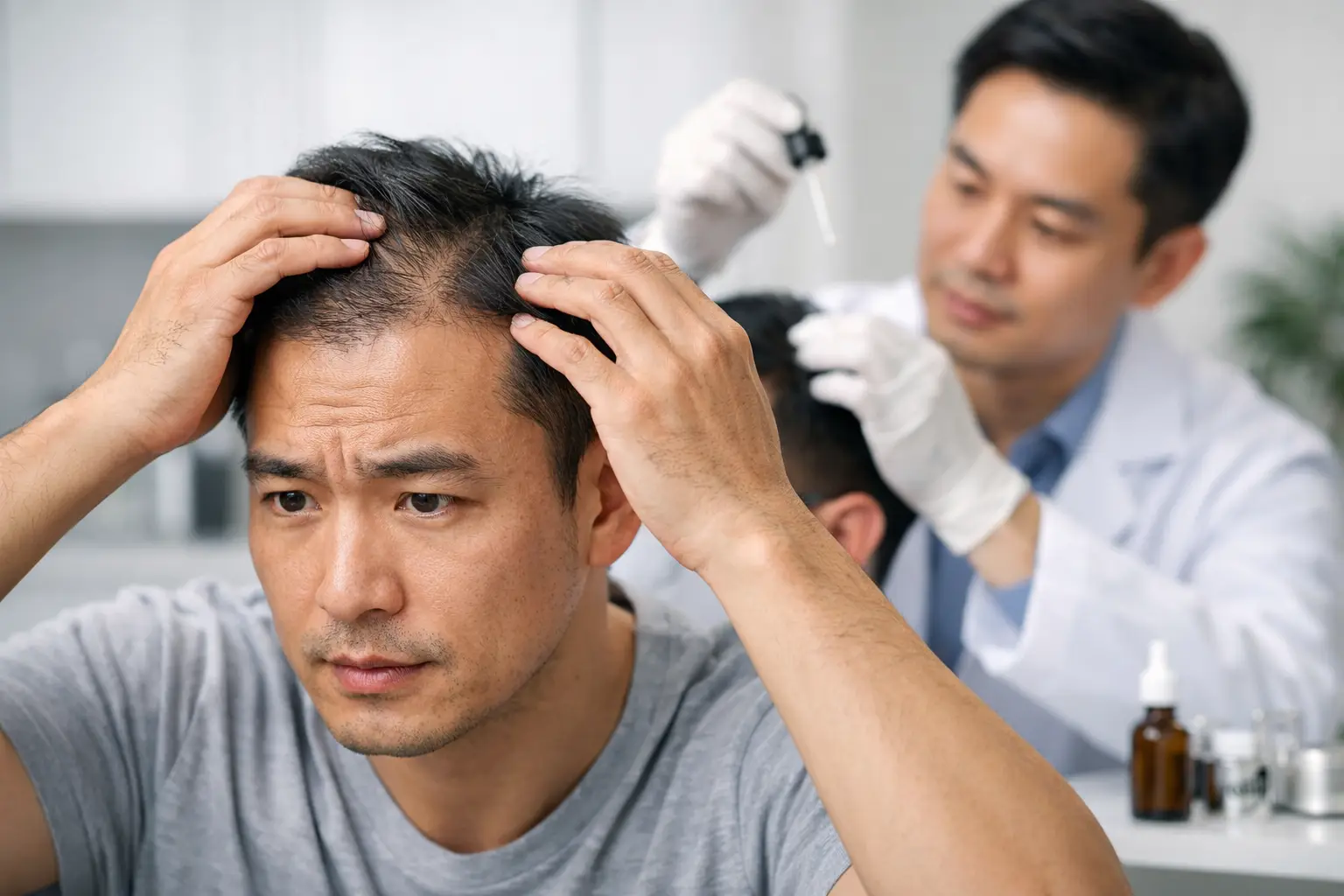
You usually notice thinning hair in ordinary moments, under office lighting, in the bathroom mirror, or when photos start showing more scalp than you expected. If you are wondering how to regrow thinning hair, the first thing to know is that hair loss is common in men, and in many cases, it can be treated or slowed with the right approach.
What matters most is not chasing every product that promises thicker hair. Thinning hair has different causes, and the treatment that helps one man may do very little for another. A medical, evidence-based plan gives you a far better chance of seeing real improvement.
How to regrow thinning hair starts with the cause
Hair does not thin for one single reason. In men, the most common cause is androgenetic alopecia, often called male pattern hair loss. This is driven by genetics and sensitivity to dihydrotestosterone, or DHT, which gradually shrinks hair follicles. Over time, hairs become finer, shorter, and less visible.
But genetics is not the only explanation. Thinning can also be linked to stress, illness, rapid weight changes, poor sleep, nutritional deficiencies, scalp inflammation, certain medications, or hormonal imbalance. In some men, low iron, vitamin D deficiency, thyroid issues, or testosterone-related changes may be part of the picture. That is why a proper evaluation matters. If you treat stress shedding as male pattern hair loss, or assume every receding hairline is just age, you can lose valuable time.
The pattern of loss also offers clues. A widening part, diffuse thinning across the crown, patchy areas, sudden shedding, or scalp itching can point toward different causes. The timeline matters too. Gradual thinning over years suggests one issue. Rapid shedding over a few months suggests another.
What actually works for thinning hair
If your goal is to regrow hair, it helps to set expectations carefully. Some treatments are better at stopping further loss than creating dramatic regrowth. Others can improve thickness, density, and hair quality, but results take time.
Minoxidil can stimulate regrowth
Minoxidil is one of the most established treatments for thinning hair. It is commonly used on the scalp to help prolong the growth phase of hair follicles and improve blood flow around the follicle environment. For many men, it can slow hair loss and support visible regrowth, especially when started early.
Consistency is the deciding factor. Minoxidil usually needs daily use for several months before results become noticeable. Early on, some men experience temporary shedding as older hairs shift out and new growth begins. That can be unsettling, but it does not always mean the treatment is failing.
Minoxidil is not perfect. It can irritate the scalp in some people, and stopping it often means the gains gradually fade. Still, for early to moderate thinning, it remains a practical first-line option.
DHT-blocking treatment may be necessary
For male pattern hair loss, reducing the effect of DHT is often central to treatment. This is where medical therapy can make a meaningful difference. If DHT is continuing to miniaturize hair follicles, stimulating the scalp alone may not be enough.
This is one area where physician guidance matters. The right treatment depends on your pattern of hair loss, age, medical history, and tolerance for side effects. It is not a one-size-fits-all decision, and it should be approached as part of a broader medical plan rather than a casual cosmetic fix.
Scalp treatments can support healthier growth
Some men benefit from targeted scalp treatments such as platelet-rich plasma, or PRP, microneedling, or physician-guided scalp rejuvenation therapies. These approaches aim to improve the scalp environment, stimulate follicles, and support stronger hair growth.
They can be helpful, but they are not magic. PRP and similar procedures often work best in men with early thinning rather than advanced baldness, where follicles may no longer be active enough to respond. They are also usually more effective when combined with medical treatment instead of used alone.
Shampoo matters less than most men think
Many men start with anti-hair loss shampoos because they are easy to buy and easy to try. The problem is that shampoo usually plays a supporting role, not a leading one. A good scalp care routine can reduce oil buildup, inflammation, dandruff, or irritation, all of which may help the scalp stay healthier. But shampoo by itself rarely regrows meaningful hair in genetically driven loss.
That does not mean scalp care is pointless. If you have seborrheic dermatitis, itching, flaking, or inflammation, treating those issues can reduce shedding and improve comfort. It is just important to keep expectations realistic.
How to regrow thinning hair without wasting time
The best results usually come from early action. Once a follicle has been inactive for too long, bringing it back becomes much harder. Men often wait until thinning is obvious, then try multiple over-the-counter products in frustration. By the time they seek medical advice, the process is more advanced.
A focused treatment plan begins with diagnosis. That may include reviewing your hair loss pattern, family history, stress levels, medications, diet, scalp health, and hormone-related symptoms. In some cases, blood tests help rule out underlying contributors such as nutritional deficiencies or endocrine issues.
From there, treatment should match the cause. A man with classic crown thinning and a strong family history may need a different approach from someone with sudden shedding after illness or a period of severe stress. If there is scalp inflammation, that needs attention. If hormonal imbalance is contributing, that should not be ignored.
This is also where privacy and professional support matter. Hair loss may not be dangerous, but it affects confidence, appearance, and how many men feel in social and work settings. A discreet clinical consultation can turn a vague worry into a practical treatment plan.
Lifestyle factors that can help or hinder hair regrowth
No lifestyle change can completely override genetics, but daily habits do influence hair health. Poor sleep, chronic stress, crash dieting, smoking, and inconsistent nutrition can all make thinning worse or trigger more shedding.
Protein intake matters because hair is built from protein. Iron, zinc, vitamin D, and B vitamins also play a role, though supplementation only helps if there is a genuine deficiency. Taking handfuls of supplements without testing is rarely the best move.
Stress deserves special attention. Men often underestimate how much prolonged stress affects the body, including the hair cycle. Stress-related shedding does not always show up immediately. It may begin two or three months after the trigger, which can make the connection easy to miss.
Your grooming habits matter too. Very tight hairstyles, harsh chemical treatments, frequent heat styling, or aggressive scratching can all worsen breakage and scalp irritation. These may not be the main cause, but they can add to the problem.
When thinning hair needs medical attention
Not every case of thinning hair requires urgent care, but some signs should prompt a proper medical evaluation. Sudden shedding, patchy loss, scalp pain, redness, scaling, or changes in body hair can point to issues beyond standard male pattern hair loss.
If hair loss is happening alongside low energy, reduced libido, unexplained weight changes, or other hormonal symptoms, it makes sense to look at the bigger picture. Men often separate hair concerns from overall health, but they are not always separate.
At a men’s health clinic such as Catalyst Clinic, hair loss can be assessed in the context of your broader well-being, including scalp health, lifestyle factors, and hormone-related concerns when relevant. That kind of personalized assessment is often what moves a man from guessing to making progress.
What results should you realistically expect?
The honest answer is that it depends on the cause, the stage of hair loss, and how consistently you follow treatment. Early thinning responds better than long-standing bald areas. Some men regain noticeable density. Others mainly maintain what they have and slow further loss, which is still a good outcome.
Most effective treatments take at least three to six months before you can judge whether they are helping. Better results often appear closer to six to twelve months. That can feel slow, but hair growth is slow biology, not instant repair.
The important thing is to look for progress in the right way. Less shedding, improved hair caliber, better scalp coverage, and slower recession all count. Regrowth does not always mean returning to the hairline you had at 22.
If you are concerned about thinning hair, the smartest next step is not another impulse purchase. It is getting a clear diagnosis and a treatment plan that fits your scalp, your health, and your goals. Hair loss is easier to manage when you act early, stay consistent, and treat it like a medical issue rather than a guessing game.