
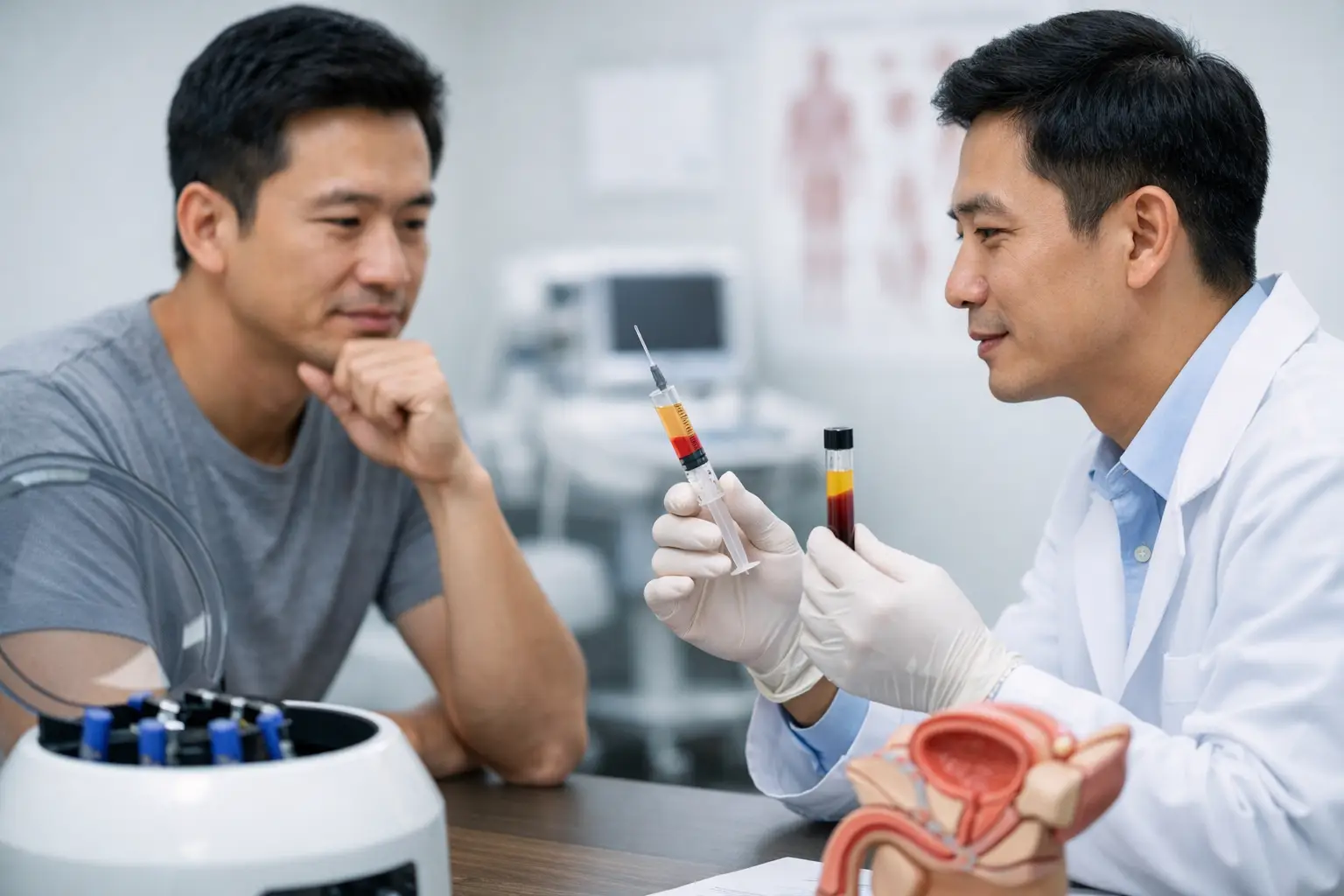
A lot of men ask about prp for ed after seeing bold claims online that promise stronger erections with a simple injection. The interest makes sense. Erectile dysfunction can affect confidence, relationships, and day-to-day well-being, and many men want an option that feels less mechanical than pills or devices. But before you treat PRP as a breakthrough, it helps to understand what it is, what the evidence says, and where it may fit into a proper medical plan.
What is PRP for ED?
PRP stands for platelet-rich plasma. It is made from a sample of your own blood that is processed to concentrate platelets and growth factors. In other areas of medicine, PRP has been used to support tissue healing in joints, tendons, and some dermatologic treatments. When used for erectile dysfunction, the idea is that these growth factors may support tissue repair and blood vessel health in penile tissue.
That is the theory. The practical question is whether that theory leads to meaningful improvements in erections, and for which patients.
How PRP for ED is supposed to work
An erection depends on healthy blood flow, nerve signaling, tissue elasticity, and hormonal balance. If one or more of these systems is impaired, erection quality can suffer. PRP is being studied because concentrated platelets release biologically active proteins that may help with tissue regeneration and vascular healing.
For men with mild vascular-related erectile dysfunction, this sounds appealing. Instead of only creating a short-term effect like some medications, PRP aims to improve the health of the tissue itself. That said, erectile dysfunction is not one condition with one cause. A man with diabetes, low testosterone, performance anxiety, sleep apnea, medication side effects, or advanced vascular disease may not respond in the same way. This is where careful assessment matters more than marketing.
What the evidence really shows
PRP for ED is promising, but it is still an emerging treatment. Some early studies and small clinical trials have reported improvements in erectile function scores, especially in men with mild to moderate erectile dysfunction. A number of patients also report better firmness or improved confidence after treatment.
At the same time, the current evidence has limitations. Many studies are small, follow-up periods are short, and treatment protocols vary. Different clinics may use different preparation methods, injection techniques, and treatment schedules. That makes it harder to compare results and harder to guarantee a predictable outcome.
So the honest answer is this: PRP may help some men, but it is not yet a universally proven or first-line solution for everyone with ED. If a clinic presents it as a guaranteed fix, that is a reason to ask harder questions.
Who may be a reasonable candidate
The men most likely to be considered for PRP are usually those with mild to moderate erectile dysfunction, especially when there is a vascular component and some natural erectile function is still present. It may also be considered by men who want a regenerative approach as part of a broader treatment plan.
It may be less suitable as a standalone option if ED is mainly driven by uncontrolled diabetes, severe cardiovascular disease, significant nerve injury, untreated hormone imbalance, or psychological stress that has not been addressed. In these cases, PRP may do little unless the underlying issue is treated properly.
This is why a physician-led consultation matters. ED is often a symptom, not just a performance problem. Blood pressure, blood sugar, testosterone levels, sleep quality, stress, medication use, smoking, and weight can all affect erection quality. Treating the symptom without evaluating the cause can waste time and money.
What happens during treatment?
The process is generally straightforward. A blood sample is taken, then processed to separate and concentrate the platelet-rich portion. That PRP is then injected into targeted penile tissue using a local numbing method to reduce discomfort.
The appointment itself is usually brief, and many men can return to normal daily activity soon after. Mild soreness, swelling, or bruising can happen, but serious side effects are uncommon when the procedure is performed by a qualified medical professional under proper sterile technique.
What patients often want to know, though, is not how fast the appointment is. It is whether it hurts, how many sessions are needed, and when results show up. The answer depends on the protocol used and the patient’s condition. Some clinics recommend a series of treatments rather than one session. Improvements, if they occur, are not always immediate and may develop gradually over weeks.
PRP for ED vs pills and other treatments
PRP is often compared with PDE5 inhibitors such as sildenafil or tadalafil. These medications usually work faster and have much stronger evidence behind them. For many men, they remain an effective first treatment. But they do not treat every cause of ED, and some men dislike planning around medication or experience side effects.
Compared with oral medication, PRP is less about short-term assistance and more about possible tissue-level improvement. That is the appeal. The trade-off is that PRP is less established, often requires out-of-pocket payment, and does not guarantee results.
PRP may also be discussed alongside shockwave therapy, vacuum erection devices, hormone optimization, lifestyle treatment, or counseling when stress and performance anxiety are playing a role. In real clinical practice, ED treatment is often layered. A patient may need more than one approach, especially if the condition has been present for a while.
Safety and limits you should know
Because PRP uses your own blood, the risk of allergic reaction is low. That is one reason many men see it as a more natural option. Even so, natural does not mean risk-free or appropriate for everyone.
Injection-based treatment still requires proper patient selection, sterile handling, and medical oversight. Men with certain blood disorders, active infections, or medication-related bleeding risk may need extra caution or may not be good candidates. Safety also depends on the clinic’s standards. A treatment offered casually, without a proper ED workup, is not a sign of quality care.
The bigger issue is expectation management. PRP is not a cure for every form of erectile dysfunction. It does not replace cardiovascular risk assessment, diabetes control, hormone evaluation, or mental health support when those are relevant. If a man expects one procedure to reverse years of smoking, poor sleep, stress, or untreated metabolic disease, disappointment is likely.
Questions to ask before choosing PRP for ED
If you are considering PRP, ask how the clinic evaluates erectile dysfunction before recommending treatment. Ask whether your hormone levels, cardiovascular risks, medications, and metabolic health will be reviewed. Ask how many sessions are usually advised, what outcomes are realistic, and what alternatives may fit your case better.
A good clinic will not rush past these questions. It will explain where PRP sits in relation to more established therapies and whether your symptoms suggest a likely benefit. Men often appreciate discretion when discussing sexual health, but privacy should never come at the expense of medical thoroughness.
Why proper diagnosis comes first
One of the most common mistakes in ED care is focusing only on the erection and ignoring the wider health picture. Erectile dysfunction can be an early sign of blood vessel disease, hormonal changes, poor sleep, chronic stress, or medication effects. In many men, improving erectile function starts with identifying what is driving the problem.
That is why a personalized consultation is often more valuable than chasing the newest treatment. At Catalyst Clinic, men’s health care is approached with that wider view in mind. The goal is not simply to offer a procedure, but to understand what is affecting performance, confidence, and overall wellness, then match treatment to the individual.
For some men, PRP may be a reasonable option within that plan. For others, better results may come from medication, hormone management, lifestyle changes, or a combination of treatments. The right path is the one that fits your health, not the one with the loudest claims.
If PRP has caught your attention, that is a good starting point, not the final answer. The most useful next step is a discreet medical evaluation that treats ED as a real health issue and gives you a clear, honest sense of what is likely to help.