
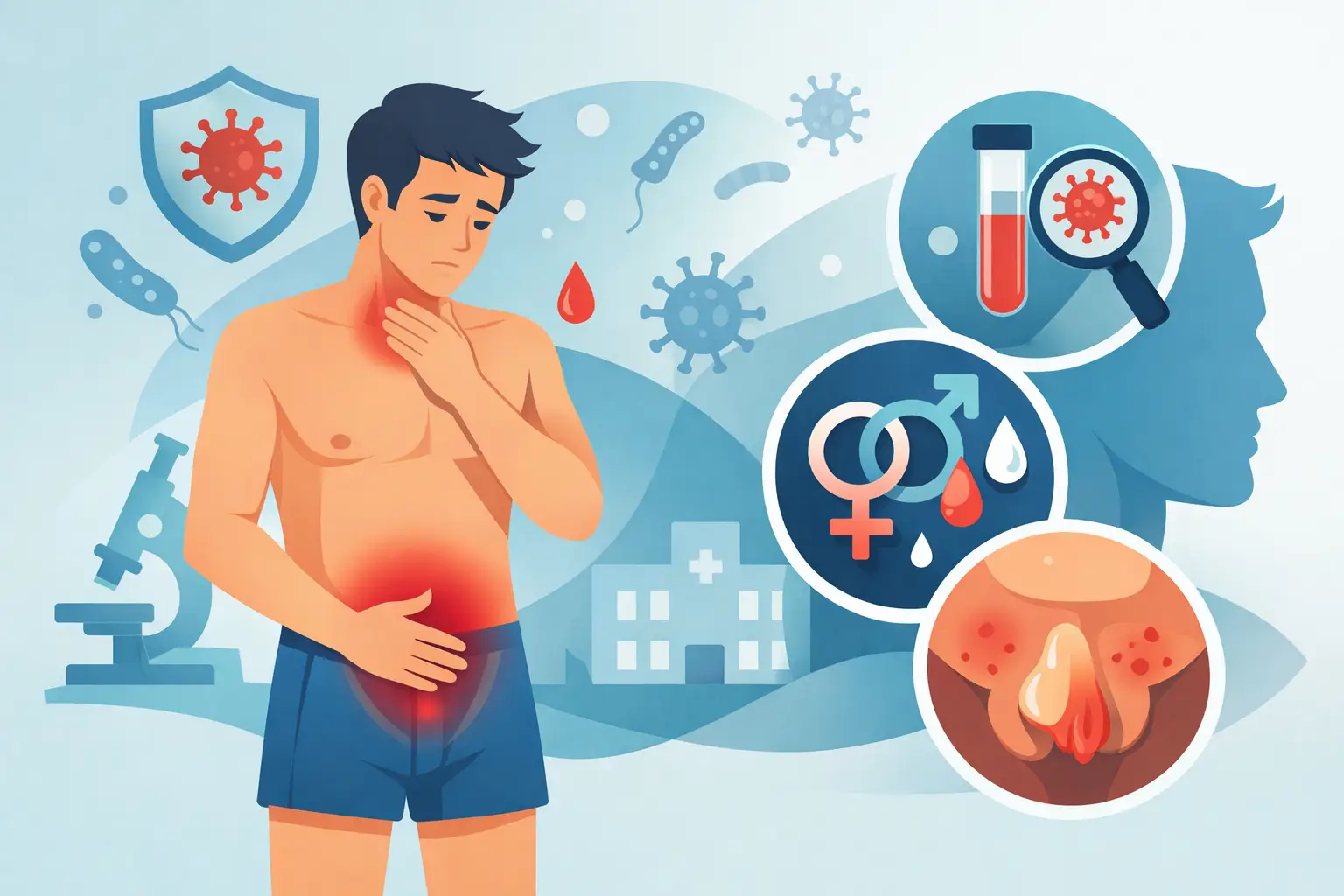
A sexually transmitted disease often starts with something easy to dismiss – mild burning when you urinate, a small sore, unusual discharge, or no symptoms at all. That is exactly why many men delay testing. By the time concern sets in, the stress is usually worse than the appointment itself.
For many patients, the hardest part is not treatment. It is getting past the hesitation. Men often worry about privacy, judgment, or what a diagnosis might mean for their relationship, work schedule, or confidence. The medical reality is simpler. Most sexually transmitted infections are manageable, many are treatable, and nearly all are better handled early.
What a sexually transmitted disease means
The term sexually transmitted disease refers to infections passed through sexual contact, including vaginal, oral, and anal sex. In clinical settings, you may also hear the term STI, or sexually transmitted infection. The distinction matters slightly because an infection can be present before it causes noticeable disease, but for most patients, the practical issue is the same – exposure, testing, diagnosis, and treatment.
Some conditions clear with the right medication. Others can be controlled effectively but remain in the body long term. That is why guessing based on symptoms alone is risky. Chlamydia, gonorrhea, syphilis, herpes, HPV, hepatitis B, and HIV can all affect men differently, and early stages may overlap or stay silent.
Why sexually transmitted disease symptoms are often missed
Men commonly expect a sexually transmitted disease to be obvious. Sometimes it is. Sometimes it is not. Chlamydia and gonorrhea may cause burning urination or discharge, but they can also produce very subtle symptoms. Syphilis may begin with a painless sore that goes unnoticed. Herpes may look like irritation, ingrown hairs, or a rash. HPV may not cause visible changes at all.
This is one reason routine screening matters after unprotected sex, a new partner, or multiple partners. Feeling fine does not rule out infection. Waiting for symptoms can delay treatment and increase the chance of passing an infection to someone else.
There is also a practical point many men do not realize. Symptoms in the urinary tract are not always caused by a sexually transmitted infection, and not every genital rash or sore is an STD. Yeast irritation, urinary tract issues, skin conditions, and prostatitis can overlap. Proper testing helps avoid the two common mistakes – ignoring a real infection or treating the wrong problem.
Common signs in men
Symptoms vary depending on the organism, where the infection is located, and how long it has been present. The most common warning signs include burning during urination, penile discharge, sores or ulcers, genital blisters, itching, pelvic discomfort, testicular pain, and pain during sex. Some men notice swollen lymph nodes, a rash on the body, rectal discomfort, or throat symptoms after oral exposure.
Timing matters, but it is not always predictable. Gonorrhea may cause symptoms within days. Chlamydia can be slower and quieter. Herpes can flare soon after exposure or later. HIV may produce a flu-like illness early on, but many people do not connect those symptoms to sexual exposure.
If you have a symptom after a sexual encounter, the safest approach is not self-diagnosis. It is medical evaluation. A delay of even a few weeks can complicate follow-up, increase anxiety, and expose your partner to unnecessary risk.
When to get tested
Testing is appropriate if you have symptoms, had unprotected sex, started a relationship with a new partner, learned that a partner tested positive, or simply want clarity after a risky encounter. Men in long-term relationships sometimes assume testing is unnecessary, but if there has been any uncertainty, screening can provide reassurance and help both partners make informed decisions.
The exact timing depends on the infection. Some tests become accurate only after a certain window period. Testing too early can miss an infection, while waiting too long can prolong transmission and symptoms. This is where physician guidance is useful. A clinician can decide which tests make sense now, which may need repeating later, and whether treatment should begin before all results are back.
For men who value discretion, this part is often easier than expected. Testing may involve urine samples, blood work, and swabs depending on symptoms and sexual practices. It is usually quick, targeted, and far less invasive than people imagine.
What happens if a sexually transmitted disease is left untreated
Untreated infections can affect more than sexual health. Some cause persistent urethritis, epididymitis, pelvic and testicular pain, skin lesions, and systemic illness. Others increase susceptibility to additional infections. Certain conditions may also affect fertility, especially if inflammation or scarring develops over time.
There is also the relationship impact. Uncertainty creates tension. Silence creates more of it. Men often seek care after weeks or months of worry, only to find that the next step is straightforward. The cost of waiting is usually emotional stress, prolonged symptoms, and increased health risk.
Not every infection leads to severe complications, but that is not a reason to take chances. The outcome often depends on what the infection is, how long it has been present, and whether it has spread beyond the original site.
Treatment depends on the diagnosis
Treatment is not one-size-fits-all. Bacterial infections such as chlamydia, gonorrhea, and syphilis are often treated with antibiotics, though drug choice depends on current guidelines, allergy history, and resistance patterns. Viral infections such as herpes or HIV are managed differently. They may require antiviral therapy, long-term monitoring, or ongoing support rather than a single short course of medication.
This is why buying medication online without proper assessment can backfire. The wrong drug may not work. The wrong dose may mask symptoms without clearing the infection. In some cases, partial treatment can complicate future evaluation.
A proper treatment plan usually includes more than medication. It may involve temporary abstinence, repeat testing to confirm clearance, partner notification, vaccination review, and advice on how to reduce future risk. At a clinic like Catalyst Clinic, that discussion is handled with privacy and practical guidance rather than judgment.
Protecting yourself without relying on luck
Prevention is not about perfection. It is about reducing avoidable risk. Condom use lowers the chance of many infections, though it does not eliminate all risk because some diseases spread through skin-to-skin contact outside covered areas. Limiting partner overlap, discussing testing openly, and avoiding sex when sores, discharge, or active symptoms are present can also make a meaningful difference.
Vaccination may be relevant in some cases, particularly for hepatitis B and HPV, depending on age, risk profile, and previous immunization history. If you are sexually active and unsure about your protection status, that is worth reviewing with a physician.
Men who travel frequently, have demanding work schedules, or prefer private care often benefit from making sexual health testing part of routine preventive care rather than waiting for a scare. That approach is practical, not excessive. It turns uncertainty into a plan.
The part many men need to hear
A sexually transmitted disease is a medical issue, not a character judgment. Men delay care because they fear embarrassment, but physicians who treat sexual health concerns regularly are focused on diagnosis, safety, and results. The goal is to identify the problem early, treat it appropriately, and help you protect both your health and your partner.
If something feels off, or if you know there has been a risk, getting tested is the responsible move. It protects your future options, clears unnecessary worry, and gives you a clear next step instead of guesswork.
Your health tends to improve the moment you stop avoiding the question and start dealing with it directly.