
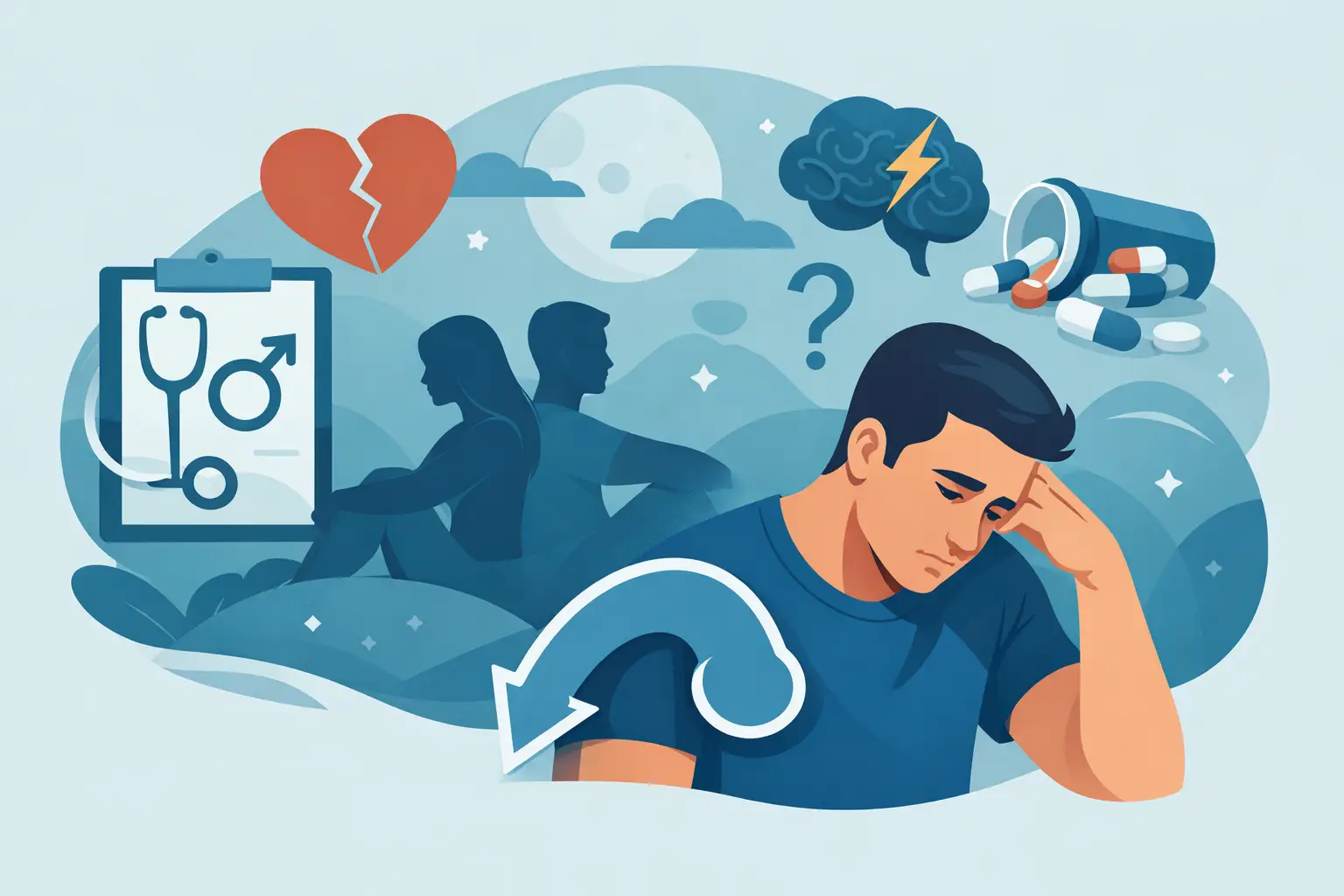
A man may notice it gradually – erections are less firm, less reliable, or harder to maintain when it matters. For many patients, the first question is straightforward: what causes erectile dysfunction symptoms? The answer is not always a single problem. Erectile dysfunction, or ED, is often the result of changes in blood flow, nerve function, hormone balance, mental health, medication use, or an underlying medical condition that has not been fully addressed.
ED is common, but it should not be dismissed as “just aging.” While erections do change over time, persistent difficulty getting or keeping an erection is often a signal worth taking seriously. In many cases, ED symptoms are one of the earliest signs that something else in the body needs attention.
What causes erectile dysfunction symptoms in the body?
An erection depends on coordination between the brain, blood vessels, nerves, hormones, and muscles. Sexual arousal starts in the brain, which sends signals through the nerves to the penis. Blood vessels then relax and widen, allowing more blood to flow in. At the same time, the veins that normally drain blood out are compressed, helping the erection stay firm.
If any part of that sequence is disrupted, ED symptoms can appear. That is why the cause may be physical, psychological, or a combination of both.
Blood flow problems are one of the most common causes
Healthy blood vessels are essential for erectile function. Conditions that narrow or stiffen the arteries can reduce blood flow to the penis and make erections weaker or shorter-lasting. This is one of the most common medical explanations for ED, especially in men over 40.
High blood pressure, high cholesterol, diabetes, obesity, and smoking all increase the risk of vascular ED. Even when these conditions seem manageable, they can still affect the small blood vessels involved in erections before they cause more obvious symptoms elsewhere. That is one reason ED can sometimes show up before heart disease is diagnosed.
Nerve damage can interfere with sexual response
Nerves are responsible for carrying signals between the brain and the penis. If those signals are interrupted, getting or maintaining an erection can become difficult.
Diabetes is a major cause of nerve-related ED because long-term high blood sugar can damage the nerves over time. Pelvic surgery, spinal injury, and some neurologic conditions can also affect erectile function. In some men, the problem is not desire but signal transmission – the body simply does not respond as it once did.
Hormonal changes may play a role
Testosterone supports libido, energy, mood, and sexual function. Low testosterone does not cause every case of ED, but it can contribute, particularly when erectile issues happen alongside reduced sex drive, fatigue, loss of muscle mass, or lower motivation.
Other hormone-related issues can matter as well. Thyroid disorders, elevated prolactin levels, and metabolic changes linked to aging or obesity may affect sexual performance. Hormones are rarely the only factor, but they can be an important part of the picture.
What causes erectile dysfunction symptoms beyond physical disease?
Not every case begins with a blood vessel or hormone problem. Stress, anxiety, depression, and relationship tension can all interfere with sexual performance. This is especially true when ED starts suddenly or happens only in certain situations.
Performance anxiety is a common example. One difficult experience can create worry about the next encounter, and that worry itself can disrupt arousal and erections. The cycle can repeat even when there is no major physical illness. Men under pressure at work, coping with sleep deprivation, or dealing with emotional strain may notice that their body does not respond the same way.
Psychological causes are real medical causes. They are not a sign of weakness, and they should not be minimized. In many men, the most accurate explanation is mixed ED, where physical changes and emotional stress reinforce each other.
Common medical conditions linked to ED
Several health problems are strongly associated with erectile dysfunction. Diabetes is one of the most significant because it can affect both blood vessels and nerves. Cardiovascular disease also matters because erections rely heavily on efficient circulation.
Obesity can contribute through inflammation, reduced testosterone, and worsening of conditions like diabetes and hypertension. Sleep apnea is another overlooked factor. Poor sleep and repeated oxygen drops during the night can affect hormone balance, energy, and vascular health.
Kidney disease, liver disease, and chronic inflammatory conditions may also affect sexual function, particularly when overall health has been under strain for some time. In clinical practice, ED is often part of a larger health pattern rather than an isolated issue.
Medications and substances that can trigger symptoms
Some men are surprised to learn that treatment for one condition may affect sexual performance in another area. Certain blood pressure medications, antidepressants, anti-anxiety medications, and treatments for prostate conditions can contribute to ED symptoms. Not every patient experiences this, and not every medication in these categories has the same effect, but it is a well-recognized issue.
Alcohol can also interfere with erections, both in the short term and over time. Recreational drugs may impair nerve signaling, blood flow, or libido. Smoking remains one of the clearest avoidable risk factors because it damages blood vessels and reduces circulation.
This does not mean men should stop prescribed medication on their own. It means medication review is an important part of proper evaluation. Sometimes the answer is adjusting treatment, not abandoning it.
Age matters, but age is not the whole story
Aging increases the likelihood of ED, but it is not accurate to say that erectile dysfunction is simply a normal part of getting older. What often increases with age is exposure to the conditions that cause ED – vascular disease, hormone changes, medication use, poor sleep, weight gain, and chronic stress.
Some older men maintain strong erectile function, while some younger men struggle with symptoms. The difference usually comes down to overall health, lifestyle, and the specific causes involved. Age can shape risk, but it does not explain everything.
When symptoms point to a broader health concern
ED is sometimes treated as a private bedroom issue, but medically, it can be much more than that. Because penile blood vessels are small, they may show signs of vascular disease earlier than larger arteries elsewhere in the body. That makes ED a possible early warning sign for heart and circulation problems.
If symptoms are persistent, worsening, or accompanied by fatigue, low libido, urinary symptoms, numbness, or other changes, a broader medical workup may be needed. Erectile dysfunction can open the door to identifying diabetes, high blood pressure, hormone imbalance, or cardiovascular risk before more serious complications develop.
How doctors figure out what causes erectile dysfunction symptoms
A good evaluation starts with a detailed medical history, not assumptions. The timing of symptoms matters. Gradual onset often suggests a physical cause, while sudden onset may point more strongly toward stress or anxiety, though that is not a strict rule.
Doctors also look at whether erections occur during sleep or wake up naturally in the morning, whether libido has changed, and whether symptoms happen in all situations or only specific ones. Medical history, medication review, blood pressure, weight, and lab works may all be part of the assessment.
Depending on the case, lab works may include blood sugar, cholesterol, testosterone, thyroid levels, and other relevant markers. The goal is not only to confirm ED, but to understand why it is happening. That is what allows treatment to be personalized rather than trial-and-error.
Why getting help early makes a difference
Many men wait too long because the topic feels uncomfortable or because they hope the problem will disappear on its own. But persistent ED symptoms deserve medical attention, especially when they recur over weeks or months.
Early treatment can improve sexual performance, confidence, and relationship quality. Just as importantly, it can uncover medical issues that affect long-term health. A discreet, physician-led consultation can help separate temporary stress-related changes from signs of a more significant vascular, hormonal, or metabolic problem.
At Catalyst Clinic, this kind of evaluation is approached with privacy, clinical focus, and respect. That matters, because men are far more likely to seek care when they feel heard rather than judged.
If you have been wondering what causes erectile dysfunction symptoms in your case, the most useful next step is not guesswork. It is a proper medical assessment that looks at the whole picture – blood flow, hormones, stress, medications, and overall health – so treatment can address the cause, not just the symptom.