
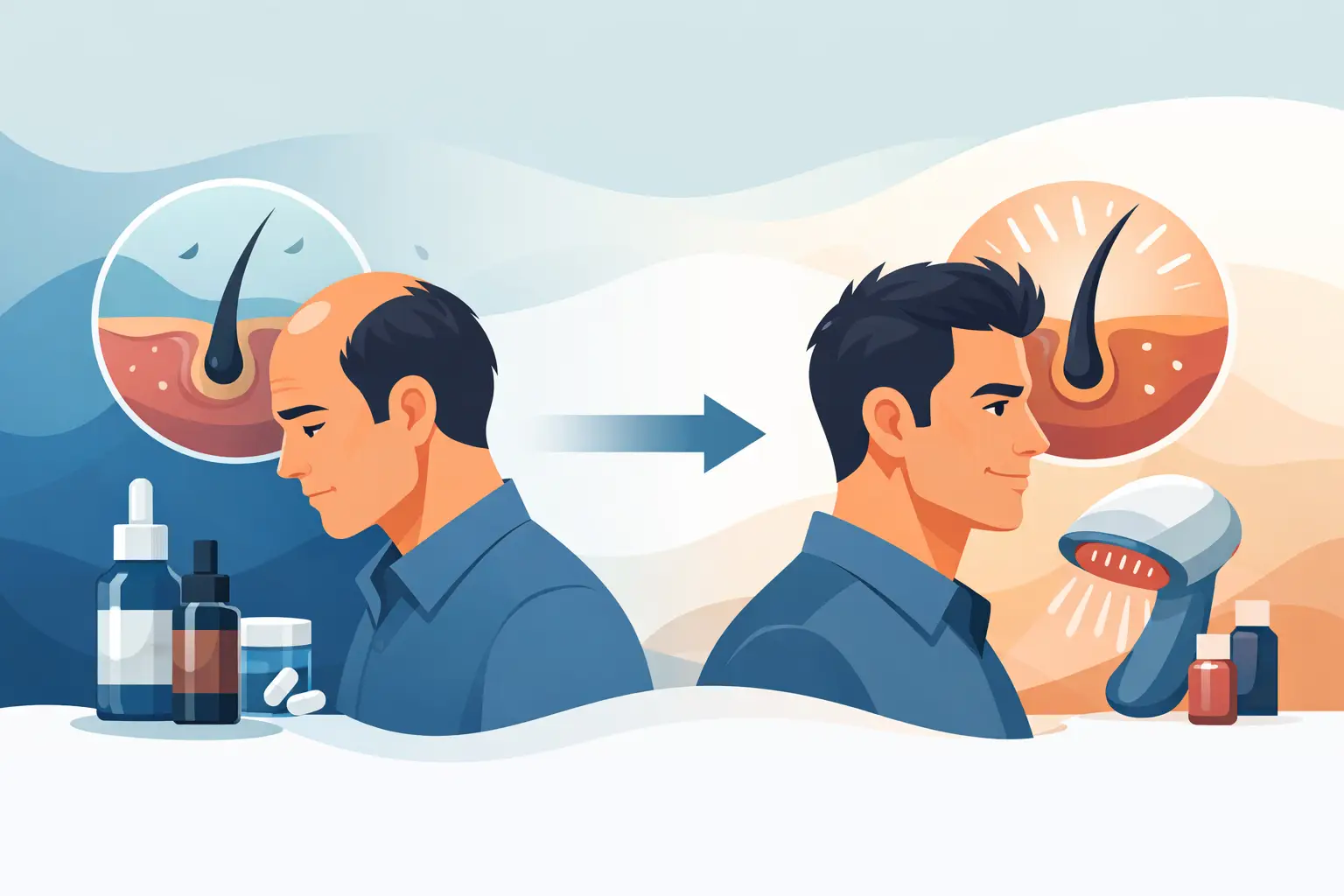
Losing more hair in the shower, seeing your hairline shift in photos, or noticing thinning under bright office lighting can feel surprisingly personal. For many patients, hair loss treatment for men is not really about vanity – it is about confidence, professional presence, and feeling like yourself again. The good news is that male hair loss is common, medically understood, and often treatable when addressed early.
Why hair loss happens in men
Most male hair loss is caused by androgenetic alopecia, also called male pattern baldness. This is driven by genetics and sensitivity to dihydrotestosterone, or DHT, a hormone that gradually shrinks hair follicles. As follicles miniaturize, hair becomes finer, grows more slowly, and eventually may stop growing altogether.
That said, not every case of shedding is male pattern baldness. Some men develop hair thinning from stress, rapid weight loss, illness, scalp inflammation, nutritional deficiency, medication side effects, or hormone imbalance. A receding hairline and thinning at the crown often point toward androgenetic alopecia, while sudden shedding across the entire scalp may suggest a different cause.
This distinction matters because the right treatment depends on the reason you are losing hair. Buying products based on marketing alone can waste months that could have been used on a more effective plan.
Hair loss treatment for men starts with diagnosis
The best first step is not choosing a product. It is getting a proper medical assessment. Hair loss can look similar on the surface, but the underlying causes can differ enough that treatment needs to be tailored.
A physician will usually ask when the hair loss started, whether it is gradual or sudden, where it is most noticeable, what medications or supplements you take, whether there is family history, and whether you have symptoms such as fatigue, scalp itching, or changes in libido. In some cases, blood tests or a scalp examination help identify contributing issues such as low iron, thyroid problems, inflammation, or hormonal factors.
For men who also have low energy, reduced muscle mass, mood changes, or sexual health concerns, the broader hormonal picture may matter. Hair concerns do not always exist in isolation, and a more complete medical view often leads to better long-term results.
What treatments actually work
There is no single best option for every man. The most effective hair loss treatment for men usually depends on age, pattern of loss, how advanced it is, medical history, and how aggressive you want treatment to be.
Minoxidil
Minoxidil is one of the most established non-surgical treatments for male hair loss. It is commonly applied to the scalp and can help prolong the hair growth phase, support thicker strands, and slow ongoing thinning. It tends to work best in men with early to moderate hair loss, especially around the crown.
The trade-off is consistency. If you stop using it, the benefit usually fades over time. Some men also experience scalp irritation or an initial increase in shedding as weaker hairs cycle out. That early shedding can be alarming, but it does not always mean the treatment is failing.
Finasteride
Finasteride works differently. It reduces the conversion of testosterone to DHT, which is the hormone strongly linked to male pattern hair loss. For many men, this can slow progression and, in some cases, improve density.
It is often one of the most effective medical options for androgenetic alopecia, but it is not a casual decision. Because it affects hormones, treatment should be discussed with a qualified doctor who can review benefits, risks, and whether it fits your medical profile. Men are sometimes hesitant because of concerns about side effects, and that conversation should be handled clearly and honestly rather than dismissed.
Combination treatment
In real clinical practice, combination treatment often gives better results than relying on one option alone. A man with early thinning may respond well to both minoxidil and finasteride, while another may need scalp-focused treatment added to a medical regimen. This is where personalization matters.
Scalp and regenerative treatments
Some clinics also offer scalp rejuvenation or regenerative approaches designed to support follicle health and improve the environment in which hair grows. These options may be useful for selected patients, especially when used alongside evidence-based medical therapy rather than in place of it.
The key question is whether a treatment has a reasonable biological basis, physician oversight, and a role within a broader plan. Men should be cautious with expensive solutions marketed as miracle cures. If a product promises dramatic regrowth for everyone, that is usually a red flag.
When timing changes your results
Hair loss is easier to slow than to reverse. Once a follicle has been inactive for too long, it becomes much harder to recover meaningful growth. That is why early treatment matters.
Many men wait until the change feels obvious to other people. By that point, they may have already lost a significant amount of density. Starting when you first notice more scalp visibility, a widening part, or progressive recession often gives you more treatment options and a better chance of preserving what you still have.
Patience is part of the process. Hair grows slowly, and most treatments need several months before results can be judged fairly. This is one reason men abandon treatment too early. A realistic plan includes not only the right therapy, but also the right expectations.
What to expect from treatment
A useful goal is often stabilization first, then regrowth second. Some men expect to recover the exact hairline they had at 25, but medicine does not always work that way. In many cases, preventing further loss is already a successful outcome.
Response varies. Younger men with recent thinning often see better improvement than men with long-standing bald areas. Crown thinning may respond differently than frontal recession. Scalp health, family history, hormones, stress, and adherence all influence outcomes.
This is why honest counseling matters. Good care is not about overpromising. It is about identifying what is realistic for your stage of hair loss and building a plan you can actually maintain.
Common mistakes men make
One of the biggest mistakes is self-diagnosing too quickly. Another is jumping from one over-the-counter product to another every few weeks. Hair treatment needs consistency, and random switching makes it hard to tell what is helping.
Some men also ignore associated symptoms that may point to a wider issue. If hair loss is happening alongside fatigue, reduced performance, poor sleep, or changes in body composition, that deserves medical attention. A comprehensive men’s health clinic can be especially helpful in these cases because treatment can be guided by the bigger picture rather than the scalp alone.
Another mistake is waiting out of embarrassment. Hair loss is common, and discussing it with a physician is no different from discussing blood pressure, testosterone, or sexual health. The sooner it is assessed, the more room there is to act.
When to see a doctor about hair loss treatment for men
You should consider a medical evaluation if your hair loss is increasing, your scalp is visible in areas that used to be dense, your hairline is changing noticeably, or shedding seems sudden. You should also seek care if you have scalp redness, itching, pain, patchy loss, or other symptoms that suggest something beyond typical male pattern baldness.
A professional evaluation is also worthwhile if you have already tried treatment without clear improvement. Sometimes the issue is the wrong diagnosis. Sometimes it is the wrong treatment. Sometimes it is simply that the plan needs enough time and follow-up to work.
At Catalyst Clinic, this kind of consultation is approached with the privacy, discretion, and clinical clarity many men are looking for. The aim is not to sell a trend. It is to understand the cause, explain the options clearly, and recommend treatment that fits your needs and comfort level.
Hair loss can affect confidence quietly, long before you say it out loud. Getting help early is not overreacting – it is a practical step toward protecting your appearance, your confidence, and your sense of control.