
A lot of men ask about p-shots only after months, or even years, of trying to work around erection changes, reduced firmness, or a drop in sexual confidence. By that point, the question is rarely cosmetic. It is usually personal, frustrating, and tied to quality of life.
P-shots are often discussed as a regenerative option for men who want to improve erectile function or sexual performance without jumping straight to surgery. The interest is understandable. The name is memorable, and the promise sounds straightforward. But the right way to think about this treatment is not as a miracle injection. It is a medical procedure with a specific rationale, realistic limits, and a clear need for proper evaluation.
What are p-shots?
P-shots, short for Priapus Shot, use platelet-rich plasma, or PRP, prepared from a sample of the patient’s own blood. After the blood is processed, the platelet-rich portion is injected into targeted areas of the penis with the goal of supporting tissue repair and regeneration.
Platelets contain growth factors involved in healing. In other areas of medicine, PRP has been used for musculoskeletal injuries, wound support, and selected regenerative treatments. In men’s sexual health, the theory is that concentrated platelets may help improve tissue quality, blood flow response, and overall erectile function in some patients.
That said, theory and marketing are not the same thing. Results vary. Some men report better firmness, sensitivity, or confidence. Others notice only mild changes, or no meaningful change at all. The treatment is best understood as one option within a broader erectile dysfunction and sexual wellness plan, not a guaranteed fix.
How p-shots are supposed to work
An erection depends on healthy blood vessels, responsive smooth muscle, intact nerve signaling, and the right hormonal and psychological conditions. If one or more of those systems is affected, performance can change.
P-shots are intended to support local tissue health by delivering PRP directly to the treatment area. The aim is not to create an artificial erection on demand, like some medications do. Instead, the goal is to improve the environment in which erections occur naturally.
This is why patient selection matters so much. If a man’s symptoms are mainly driven by uncontrolled diabetes, significant vascular disease, low testosterone, medication side effects, severe performance anxiety, or relationship stress, PRP alone may not address the real cause. In some men, it may be a useful add-on. In others, the better first step is treating the underlying issue.
Who may be a good candidate for p-shots
Men usually consider p-shots when they want a non-surgical approach and are looking for more than a temporary medication effect. This may include men with mild to moderate erectile dysfunction, reduced penile sensitivity, or incomplete response to standard ED medication.
It may also come up in men who want a physician-led regenerative option after noticing age-related changes in erection quality. Some are still able to have intercourse but feel that firmness, consistency, or confidence is not what it used to be. Others are trying to avoid a pattern where every sexual encounter feels dependent on timing a pill.
A reasonable candidate is not simply someone interested in the procedure. A reasonable candidate is someone who has been medically assessed and understands what the treatment can and cannot do. Men with active infection, uncontrolled bleeding risk, certain blood disorders, or unrealistic expectations may not be suitable. The same applies if the main complaint points more clearly toward a different diagnosis that needs direct treatment.
What happens during the procedure
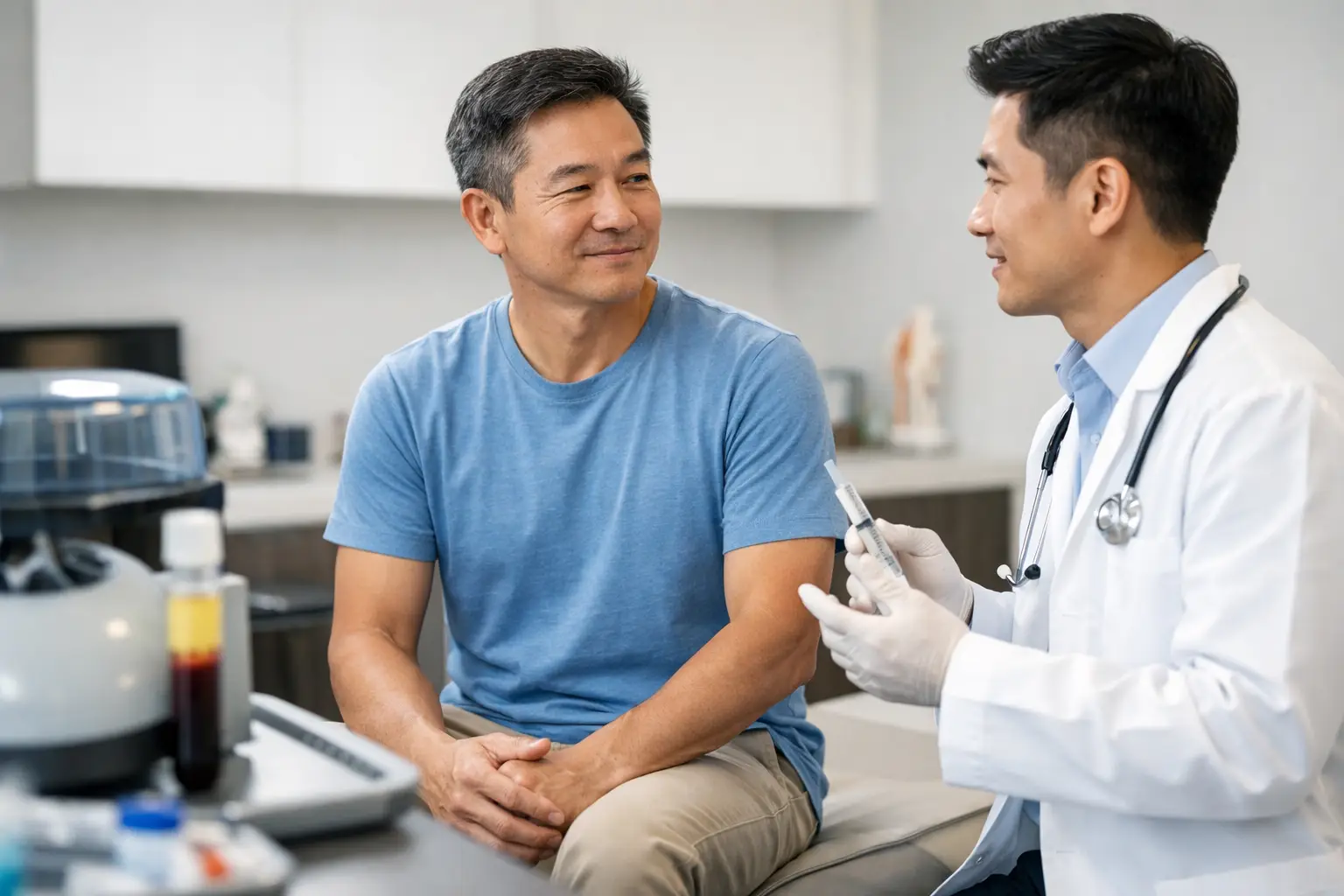
The process starts with drawing a small amount of blood. That sample is spun in a centrifuge to separate and concentrate the platelet-rich plasma. Once prepared, the PRP is injected into specific areas after the penis has been numbed with local anesthetic.
Most men are relieved to learn that discomfort is usually manageable. The numbing step matters, and a proper clinical setting matters just as much. This is not a procedure that should be treated casually or chosen based on sales language alone.
The visit is generally brief, and downtime is limited. Mild swelling, soreness, pinpoint bruising, or tenderness can happen for a short period afterward. Your doctor may give specific advice on when to resume sexual activity and whether any supporting treatment is recommended alongside the injection.
What results should you realistically expect?
This is where a careful conversation matters more than hype. Some men notice improvement over several weeks as the treated tissue responds. Reported benefits may include better erection quality, improved sensitivity, or stronger confidence during sex. A few men also ask about visible size changes, but that should not be the main reason to pursue the treatment. Claims in that area are often overstated.
The better question is whether the treatment helps function. Can you achieve firmer erections? Are erections easier to maintain? Do you feel less dependent on workarounds and more confident in intimate situations? Those are more meaningful outcomes.
Results are not immediate for everyone, and they are not permanent for everyone either. Some men may need repeat sessions, while others may benefit more from combining PRP with other treatments such as oral medication, shockwave therapy, hormone optimization, lifestyle changes, or management of vascular risk factors. It depends on the cause of the problem, the severity, and the overall health of the patient.
P-shots are not a substitute for diagnosis
One of the most common mistakes in men’s sexual health is treating a symptom without understanding why it started. Erectile dysfunction can be an early sign of cardiovascular disease, metabolic problems, hormonal imbalance, nerve issues, or stress-related strain. Looking only for a quick procedure can delay proper care.
A good consultation should cover more than the penis itself. It should include your medical history, medication review, onset and pattern of symptoms, morning erections, libido, energy, sleep, and relevant blood work when appropriate. If there are signs of low testosterone, poor glucose control, blood pressure issues, or psychological stress, those findings matter.
This is where a physician-led men’s health clinic adds value. At Catalyst Clinic, treatment decisions are built around the full picture, not just the procedure a patient asks about. That approach is often the difference between chasing temporary fixes and getting a plan that makes sense.
Risks and limitations of p-shots
Because PRP is derived from your own blood, the risk of allergic reaction is low. Even so, low risk does not mean no risk. Injection-related bruising, swelling, tenderness, bleeding, or infection are possible, though careful technique helps reduce these issues.
The bigger limitation is uncertainty of response. PRP treatments continue to attract attention, but clinical evidence in sexual medicine is still developing. Some studies are promising, yet the treatment is not equally effective for all men. If your ED is advanced, tied to major vascular disease, or linked to severe nerve damage, a p-shot may not deliver the result you want.
That does not make the procedure ineffective. It means it must be positioned honestly. Men deserve a clear explanation of where it may help, where it may fall short, and what alternatives are available.
Questions to ask before getting p-shots
Before moving forward, ask what is causing your symptoms, whether you are a good candidate, what kind of result is realistic in your case, and whether other treatments should be considered first or at the same time. Also ask how the PRP is prepared, who performs the procedure, what side effects to expect, and how success will be measured.
A trustworthy consultation should not pressure you. It should clarify the role of the treatment within your overall sexual health, explain trade-offs, and leave you with a plan that feels medically sound.
When p-shots make sense
P-shots make the most sense when they are used thoughtfully – not as a trend, and not as a shortcut around proper diagnosis. For the right patient, they may offer a meaningful improvement in function and confidence. For the wrong patient, they can become an expensive detour.
If sexual performance has changed, the most useful next step is not guessing. It is getting assessed in a private, professional setting where the conversation is direct, discreet, and focused on what will actually help. The best treatment is the one that fits your body, your health, and your goals.